
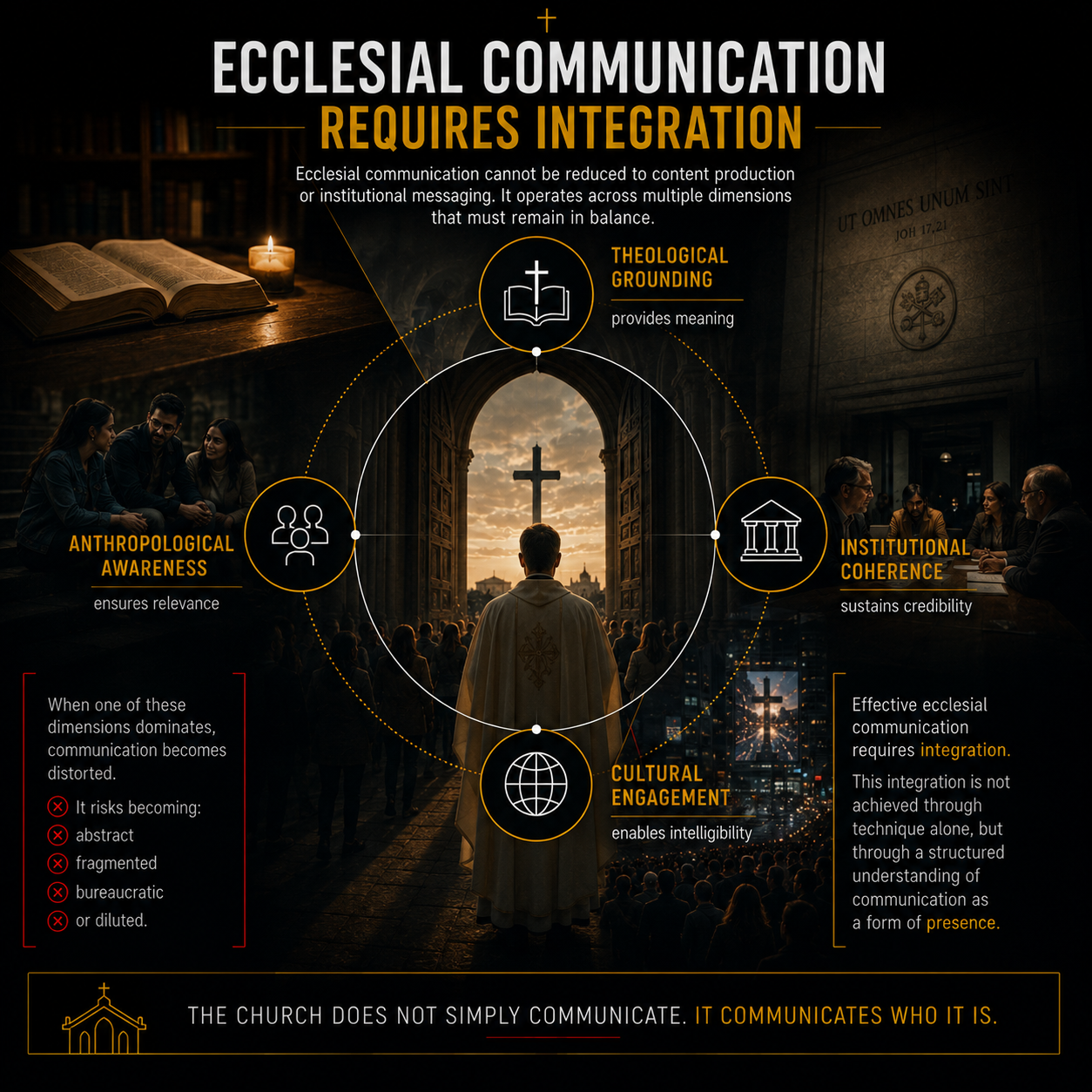
Ecclesial communication cannot be reduced to content production or institutional messaging. It operates across multiple dimensions that must remain in balance.
Theological grounding provides meaning.
Anthropological awareness ensures relevance.
Institutional coherence sustains credibility.
Cultural engagement enables intelligibility.
When one of these dimensions dominates, communication becomes distorted. It risks becoming abstract, fragmented, bureaucratic, or diluted.
Effective ecclesial communication requires integration.
This integration is not achieved through technique alone, but through a structured understanding of communication as a form of presence.
The Church does not simply communicate. It communicates who it is.