Vatican communication today unfolds across a hybrid media ecology in which institutional authority meets platform logic.
This creates a distinctive communicative tension.
On one hand, Vatican communication has historically relied on forms associated with institutional mediation: official texts, press briefings, print culture, radio, and symbolic public events.
On the other, digital environments increasingly privilege immediacy, visuality, personalization, and platform-native storytelling.
These are not merely different channels. They imply different communicative logics.
From Broadcasting to Platform Presence
A notable shift has been the movement from one-directional broadcasting toward multi-platform presence.
Through outlets such as Vatican News, social media accounts of the Dicastery for Communication, livestreamed liturgies, and papal digital messaging, communication increasingly operates in networked rather than solely institutional forms.
This raises a media question: Is the Vatican simply adapting old communication to new platforms or developing genuinely platform-conscious forms of witness?
The Medium Shapes Reception
Consider three dominant modes:
Textual communication
Encyclicals, messages, official statements remain high-authority forms, but circulate today within fragmented digital reading cultures.
Visual communication
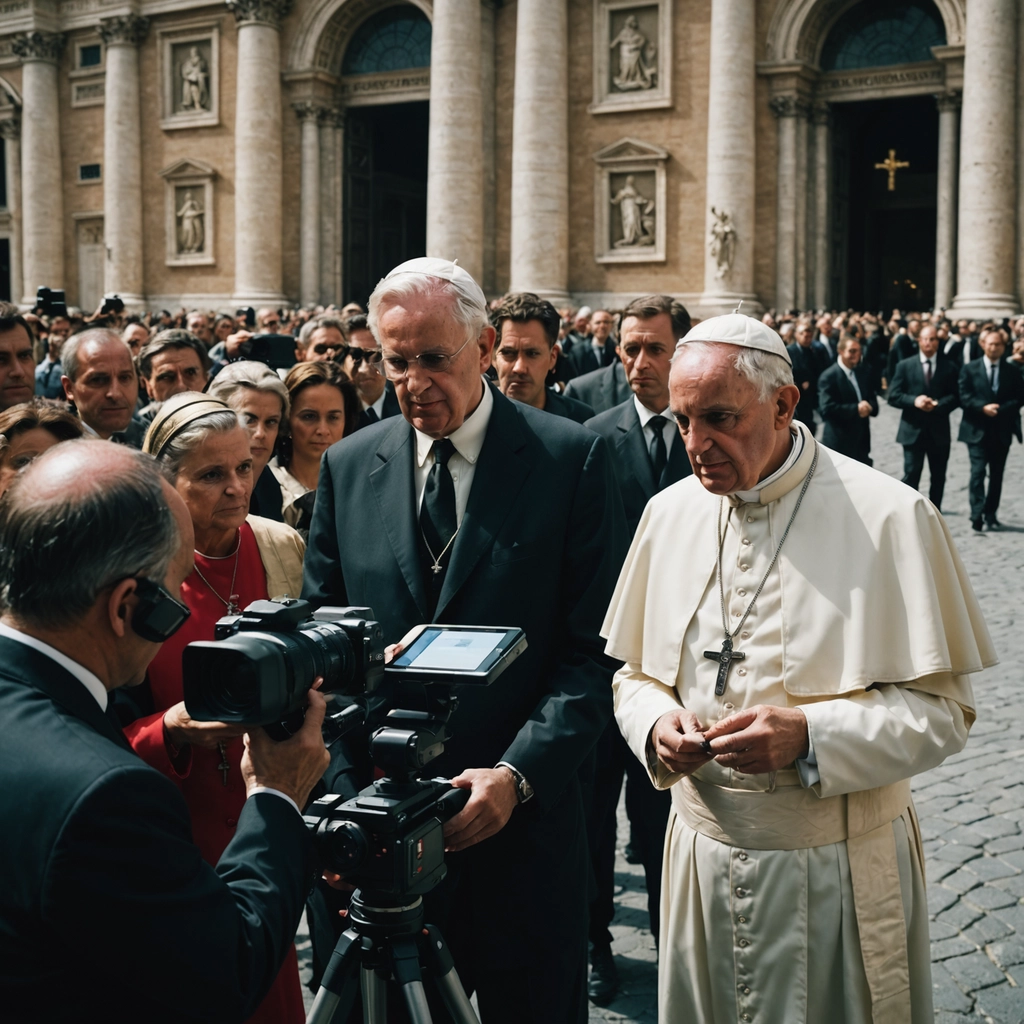
Images, livestreams, symbolic gestures, and papal encounters often carry greater circulation power than formal texts.
Platform communication
Social media introduces logics of brevity, immediacy, and algorithmic visibility that reshape how messages are received.
Each medium does not merely carry the same message differently. Each reframes it. That is the central media-analytic issue.
Witness in a Platform Environment
The challenge, then, is not only digital presence. It is digital witness.
How can institutional communication inhabit platform logics without being absorbed by them? How can symbolic depth survive within environments structured by speed and attention metrics?
These questions concern communication strategy but also media theology.
The question is not whether the Church communicates digitally,
but what kind of witness digital media make possible.
That is where media analysis becomes essential.