
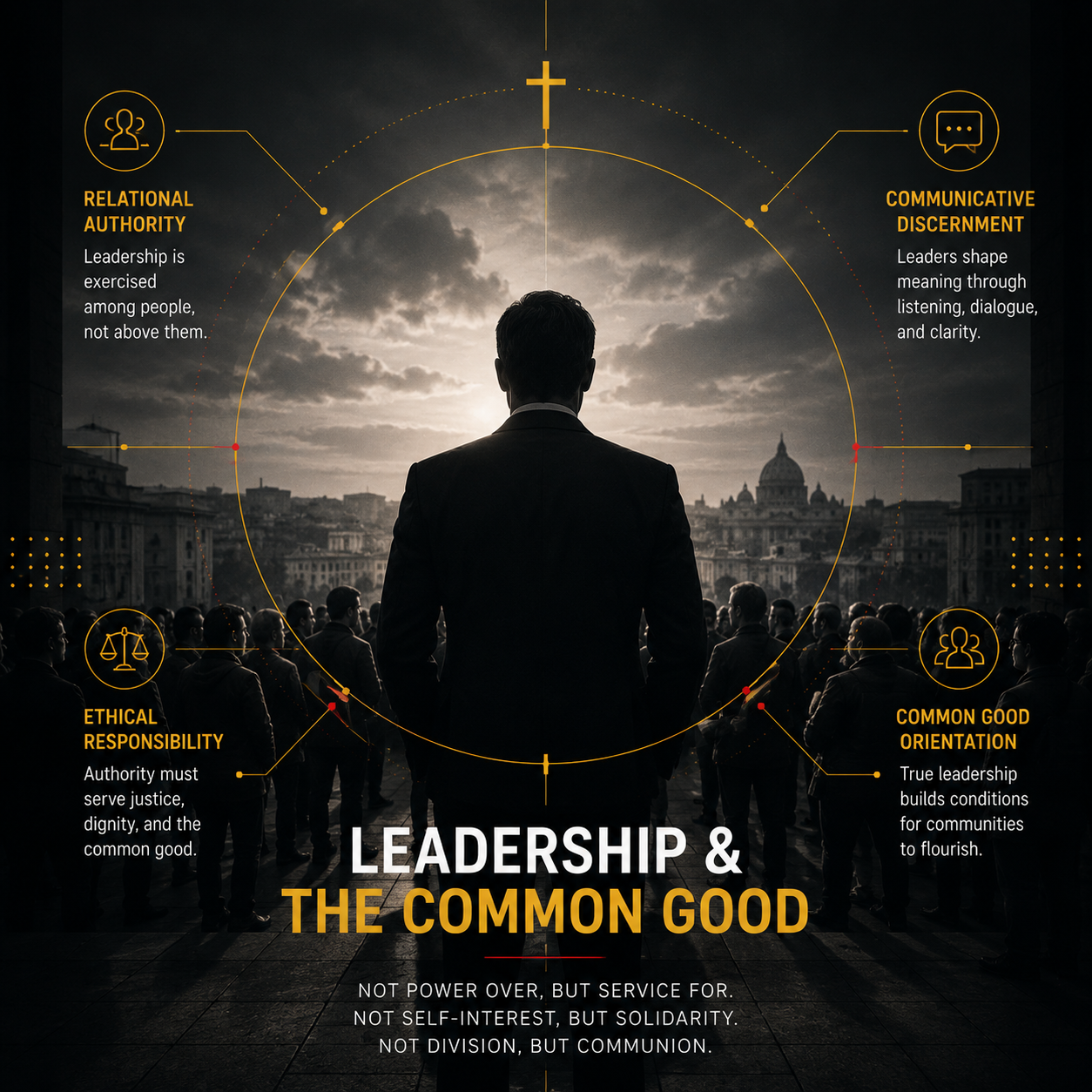
Leadership is not only the exercise of authority.
It is also a responsibility toward the common good.
Within the perspective of Catholic social thought, leadership cannot be reduced to efficiency, control, or institutional management. Its deeper measure is whether it helps generate conditions in which persons and communities can flourish.
This includes communication.
Leaders shape not only decisions, but meaning. They influence whether institutions foster trust or suspicion, participation or exclusion, solidarity or fragmentation. In this sense, communicative leadership is inseparable from the common good. It concerns how authority is exercised relationally, ethically, and publicly.
Especially in times of social polarization, leadership requires more than strategy. It requires moral and communicative discernment.
The question is not only whether leadership is effective,
but whether it serves communion, justice, and the common good.